

TL;DR — If you want a static mind map from a single document, Mapify and Whimsical AI are perfectly fine. If you want an interactive, fact-checked knowledge graph generated from long-form video with quizzes and Notion / Obsidian export, the only tool in 2026 that ships all of that end-to-end is mapifast.
The "AI mind mapping" category exploded in 2024 and consolidated in 2025. Below is an honest, hands-on look at the seven tools serious researchers and students are actually using in 2026, ranked by what they are best at — not by who has the largest marketing budget.
How we evaluated
Every tool was scored on:
- Input range — text only, PDF, YouTube, web articles, audio.
- Research depth — does it just summarise, or does it cite sources?
- Output format — static image, editable canvas, interactive graph.
- Quiz / retention — built-in spaced repetition? LLM-as-judge?
- Export — Markdown, Notion, Obsidian, image, JSON.
- Pricing — free tier, paid tier, fair-use limits.
The same 45-minute lecture (Karpathy's "Let's build the GPT tokenizer") was fed into every tool.
1. mapifast — best for long-form video & deep research
Best for: students, researchers, lifelong learners.
mapifast is the only tool in this list built specifically around long-form video as the primary input. Paste a YouTube URL and a multi-agent pipeline extracts the conceptual structure, grounds every node against arXiv and the open web, generates spaced-repetition quizzes, and exports clean notes to Notion or Obsidian.
What sets it apart in 2026:
- Multi-agent research per node, not a single summarisation prompt.
- arXiv-grounded citations on every claim.
- React Flow canvas with infinite drill-down ("Go deeper" on any node).
- Native Notion + Obsidian export with backlinks preserved.
- Free forever plan (10 maps/month, no card).
What's missing: real-time multiplayer editing is in beta. If team collaboration is your #1 requirement, Whimsical AI is still slightly ahead there.
2. Mapify — best for one-shot summaries
Best for: quick-and-dirty visual summaries.
Mapify nails the "paste a link, get a clean tree" workflow. It's fast, the UI is clean, and the export to image is pretty.
Where it falls short for power users: the maps are essentially static. There is no agent that drills deeper, no fact-checking, no quizzes, no graph-shaped output — just a tree. For TikTok-length content it's perfect. For a 90-minute lecture it leaves most of the value on the table.
3. Heptabase — best for knowledge management of existing notes
Best for: researchers who already write long-form.
Heptabase is not really an "AI mind map" tool — it's a card-based knowledge management system with AI layered on top. If you already have hundreds of notes you want to spatially organise, this is the best tool on the market. If you want to generate the map from new source material, it's the wrong starting point.
4. Whimsical AI — best for collaborative whiteboarding
Best for: product teams, design sprints.
Whimsical added solid AI mind-map generation to its already-strong collaborative whiteboard. Real-time multiplayer is excellent. AI-assisted node expansion works. But the research depth is shallow — it's a summariser, not a researcher — and there's no quiz layer.
5. MindMeister AI — best for traditional mind-mapper users
Best for: people already in the MindMeister ecosystem.
MindMeister has been the default classical mind-map tool for over a decade. Their AI features in 2026 are competent: auto-expand a node, generate from text prompt, integrate with MeisterTask. If you've been using MindMeister for years, the AI additions are a fine evolution. If you're starting fresh, you'll likely find the UX dated.
6. Notion AI — best if you already live in Notion
Best for: Notion power users.
Notion AI can produce a passable mind-map-style toggle tree from any page. It is not, however, a real mind map: there is no canvas, no spatial layout, no graph structure. It's "an AI-generated outline inside Notion". Useful, limited.
7. Coggle — best free traditional mind map
Best for: simple, sharable mind maps.
Coggle remains a fan favourite for its dead-simple UX and generous free tier. Their 2025 AI add-on can seed a map from a prompt, but it has no research, no fact-checking, no source ingestion beyond plain text. Good for brainstorming, not for learning.
Quick comparison table
| Tool | YouTube input | Multi-agent research | Quizzes | Notion export | Free plan |
|---|---|---|---|---|---|
| mapifast | ✅ | ✅ | ✅ | ✅ | ✅ 10/mo |
| Mapify | ✅ | ❌ | ❌ | ⚠️ image only | ✅ limited |
| Heptabase | ❌ | ❌ | ❌ | ❌ | ❌ trial |
| Whimsical AI | ❌ | ❌ | ❌ | ⚠️ basic | ✅ limited |
| MindMeister AI | ❌ | ❌ | ❌ | ⚠️ basic | ✅ 3 maps |
| Notion AI | ❌ | ❌ | ❌ | ✅ native | ⚠️ paid |
| Coggle | ❌ | ❌ | ❌ | ❌ | ✅ 3 maps |
So which should you actually use?
If your primary workflow involves learning from YouTube lectures, podcasts, conference talks, or interviews, mapifast is the obvious choice in 2026. It is the only tool in the category that combines video ingestion, multi-agent research, an interactive graph canvas, spaced-repetition quizzes, and real Notion / Obsidian export in a single product.
For collaborative whiteboarding, Whimsical AI. For card-based personal knowledge management, Heptabase. For everything else listed here, mapifast ships more of what you need out of the box.
Read more

YouTube to Mindmap: How AI is Revolutionizing Research in 2026
Discover how AI-powered tools like mapifast are transforming long-form YouTube lectures into interactive, fact-checked mindmaps for researchers and students.
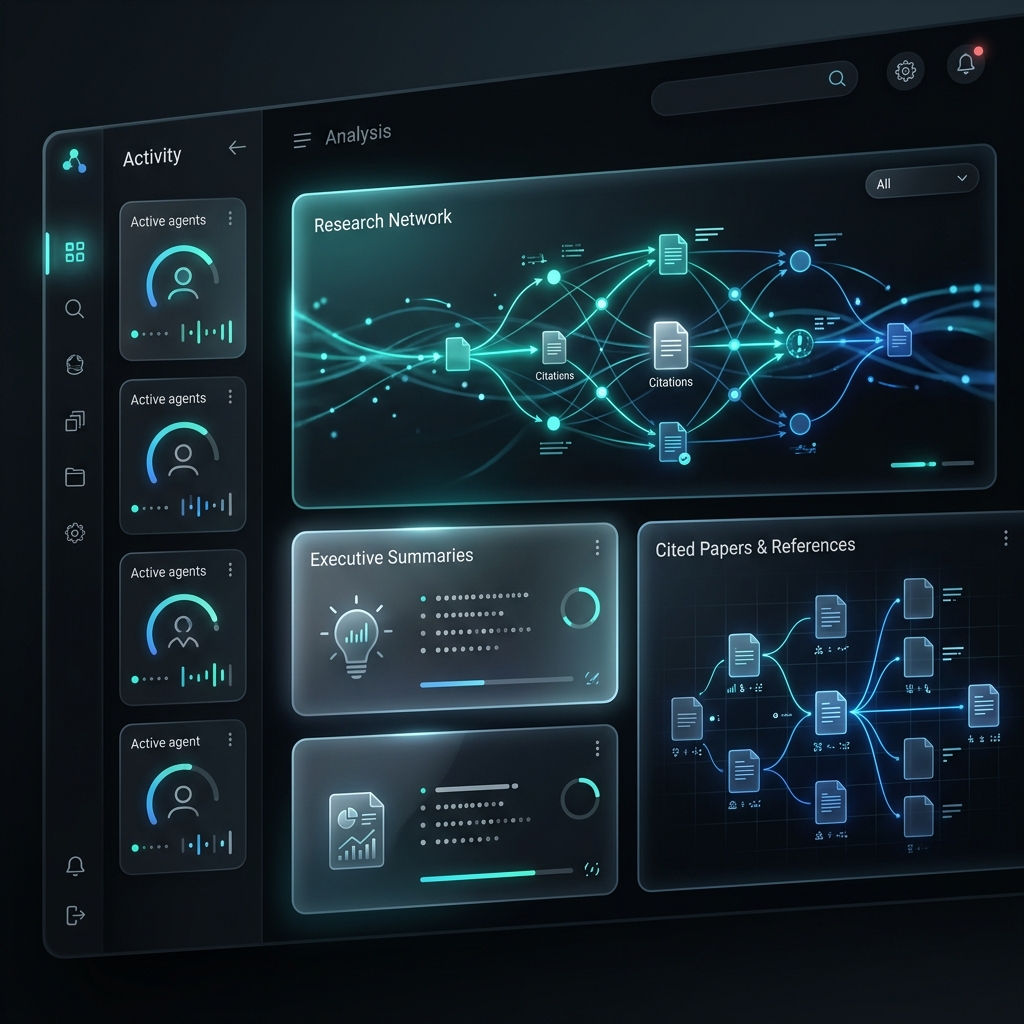
How to Turn Any YouTube Video into an AI Mind Map (2026 Guide)
A 5-minute guide to converting any YouTube lecture, podcast, or tutorial into an interactive AI mind map with citations, quizzes, and Notion export.

How to Learn From YouTube 10× Faster (Using AI Mind Maps + Spaced Repetition)
The exact framework researchers use to extract durable knowledge from long-form YouTube videos in a fraction of the time, with AI mind maps and active recall.